for Brands
We work with the founders and management teams to define and refine strategy.
Then we implement the strategies we distill, taking them through to confirmed wholesale orders and pre-orders, ensuring that both deposits and full payment are received.
Strategy and execution are not separate linear processes, and together they have many layers. In every case this includes clearly identifying:
Which stores do we want to target; and,
Why are they going to be interested in the brand we represent.
We try to unlock the real value of each brand and how this can impact specific stores worldwide and resonate with their customers.



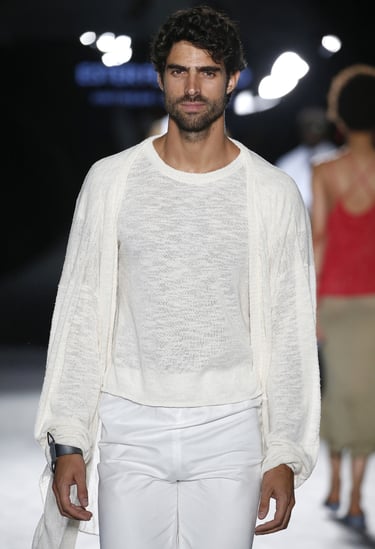






Brand Curation
Does your brand have a reasonably large potential for growth?
We consistently find that many brands do not understand which international markets they will do well in, and because we develop a unique sales plan for each brand, we do not restrict ourselves to any particular vertical.
We have a global presence, although we are happy to only represent brands in specific territories where there is a business case to do this - for example a brand that is strong in France may want to expand across the 27 countries of the European Single Market, or a brand that is strong in Europe may be well positioned to develop stores in the USA, Australia or Japan.
The brands we work with generally fall into two categories:
They are either small brands that have started and gown by selling direct to consumers (D2C) and have reached the limits of what can be achieved without developing a wholesale model; or
They are brands that have grown by selling wholesale (B2B), but over the last few years they have found that the traditional wholesale channels no longer work.
Traditional wholesale channels are becoming less effective
What are your alternatives?
Over the last 5 years, the wholesale business models that did work have ceased to be successful or viable.
Trade Shows - have been in decline for many years. For the first two years of Covid all trade shows were closed. During this time the only way that a wholesale buyer and a brand could make contact and interact with one another was by using online channels. By the end of 2021, two years into the Covid pandemic, any wholesale buyer who could not work online had left the industry, because there was very little for a wholesale buyer to do if they could not embrace online working. When the Covid restrictions subsided, finance directors were unwilling to give buyers the budgets to travel around the world as they had been doing pre-Covid, and most wholesale buying has remain online since this time. Couple the fact that attending a trade show as a brand is very expensive, with the fact that wholesale buyers from prestigious stores rarely attend trade shows, and it is becoming progressively more difficult to justify the cost or presenting at a trade show in terms of generating a positive return on investment (ROI).
Traditional Sales Agents - during the same time, most traditional wholesale agents stopped working because they could not make appointments with buyers. The cliché about wholesale sales agents is that most people will tell you this is a good way to get business, "if you can find a good one". However, when asked if they have know any good wholesale sales agents, most people do not currently know any at all, because many of the good agents left the industry between 2019 and 2021 and now the costs make it impractical for them to return. Business costs for a traditional sales agent have increase and orders have become much more difficult for them to find, because the number of good quality stores in any geographic region is much less than 5 years ago, which severely limits the viability of this channel. Generally, although a traditional sales agent seems like a good idea, they are often counter productive because they tie up a geographic region without being able to generate significant orders from enough stores to make continuing their activities sustainable or viable.
B2B e-Marketplaces - The first attempt at making online ordering happen at scale was through wholesale business-to-business (B2B) e-marketplaces. Through the first two years of Covid these e-marketplaces were seen as the future of B2B ordering and they raise a lot of investment. This enabled them to offer new buyers incentives, and a typical incentive of this time was that any new buyer could get €300 - €350 free credit to spend on their first purchases without ever needing to repay it. The anticipation was that this would encourage buyers to make their first orders, and the e-marketplace would recoup this money by marking a profit on subsequent orders. However, this rarely happened. Now most B2B e-marketplaces have dramatically contracting, and they generally participants only get small orders from stores that most people have never heard of. These orders are often not viable to fulfil.
Online Advertising - against the background of a wholesale industry that could not have physical meetings, and with online e-marketplaces only yielding small orders with very little repeat business, many brands realised the power of working online for B2B sales and looked for a viable way of doing this. Advertising on channels such as Google, Facebook and Instagram seemed obvious. However, it is probably no coincidence that in 2021, tracking changes brought about by changes in Apple’s iOS 14.5, dramatically increased the cost of pay-per-click advertising, making it almost impossible to achieve an viable ROI out of any of the paid online channels.
See which buyers in our network are looking for a brand like yours?
A short call is all it takes to see if F-tail's Direct Wholesale Service will work for your brand - no deck, no pitch, just your products and out network.
Company
F-tail, which is the successor to the e-commerce revolution, is an integrated multi-channel approach to retail, where retailers grow in importance and value by defining a new level of relevance to their customers, generally combining physical stores with e-commerce.
© 2026 The Future of Retail Ltd. All rights reserved.
Services
Keep in Contact